
Introduction
According to Constant Contact's Small Business Now Report, 60% of SMBs say finding new customers is their top marketing challenge — and 73% aren't confident their current marketing strategy is working.
That disconnect is expensive. Without a clear lead generation strategy or someone qualified to own it, businesses spend budget on activity that never converts.
This guide tackles "digital marketing lead" from both angles: the prospect (someone who shows interest through a digital channel) and the professional role (the person responsible for turning that interest into revenue). If you're building a lead generation program or deciding who should run it, you'll find the strategy, best practices, and metrics you need here.
Key Takeaways
- The term "digital marketing lead" covers both a prospective customer and the professional who manages lead generation campaigns.
- MQLs and SQLs represent different readiness levels — treating them the same wastes sales effort.
- Content marketing, SEO, email, and paid ads are the highest-ROI lead generation channels for most SMBs.
- Landing page optimization, lead scoring, and sales-marketing alignment most directly improve conversion rates.
- Offshore digital marketing professionals fill the lead role at 60–70% lower cost than domestic hires.
What Is a Digital Marketing Lead?
The phrase "digital marketing lead" actually refers to two distinct things: a type of prospect, and a professional role. Both definitions matter, and confusing them leads to misaligned strategy.
The Prospect Definition
A digital marketing lead (the prospect) is someone who has shown interest in a company's product or service through a digital touchpoint. That could be a website visit, a form submission, a social media interaction, an email click, or a content download. What separates a lead from a cold contact is that they initiated the signal. No cold outreach required.
The Professional Role Definition
A digital marketing lead (the role) is the specialist or manager responsible for planning, executing, and overseeing digital marketing campaigns. They own the strategy across SEO, paid advertising, email, social media, and content — and they're accountable for pipeline metrics like cost per lead and conversion rate.
IQL, MQL, and SQL: The Three Lead Categories
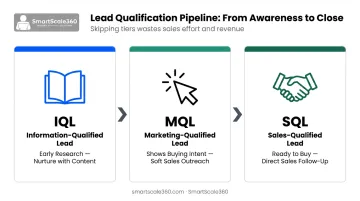
Most digital marketing pipelines use three qualification tiers. Knowing where a prospect sits determines how you engage them:
| Stage | What It Means | Right Response |
|---|---|---|
| IQL (Information-Qualified Lead) | Provided basic contact info; in early research mode | Nurture with educational content |
| MQL (Marketing-Qualified Lead) | Engaged meaningfully with content; shows buying intent | Pass to sales for soft outreach |
| SQL (Sales-Qualified Lead) | Clear intent to purchase; ready for a sales conversation | Direct sales follow-up |
Adobe defines an MQL as a prospect vetted by marketing who has engaged with campaigns and could become a customer with proper nurturing. An SQL, by contrast, has the information, budget, and intent needed to make a purchase decision.
For SMBs, the cost of skipping this framework is concrete: when sales teams treat every lead the same, they burn time on early-stage prospects while high-intent buyers go cold waiting for follow-up. Tiering your leads means marketing nurtures the early ones, and sales only picks up the phone when the timing is right.
What Does a Digital Marketing Lead Do?
The role spans strategy, execution, and reporting — often simultaneously. Here's what a digital marketing lead typically owns day-to-day:
- Campaign management — planning and running campaigns across SEO, paid search, email, and social channels
- Performance analysis — reviewing KPIs, identifying what's working, and recommending budget adjustments
- Content coordination — briefing writers and designers, managing content calendars, and aligning content with the buyer journey
- Lead tracking — monitoring pipeline movement from IQL to MQL to SQL using CRM and analytics tools
- Cross-functional collaboration — working with sales, design, and web development to keep campaigns cohesive
Because the role sits at the intersection of marketing and revenue, it carries real budget accountability. That's partly why hiring one full-time is such a significant commitment for most SMBs.
The Cost Reality for SMBs
Hiring a full-time in-house digital marketing lead is expensive. Glassdoor estimates the median total pay for a US Digital Marketing Manager at $129,000 per year, with senior lead roles reaching $195,000 in total compensation. For most SMBs, that's prohibitive, particularly when labor costs already account for up to 70% of total business expenses.
SmartScale360 offers a direct alternative: college-educated, English-speaking remote digital marketing professionals at 60–70% lower cost than a domestic hire, with no setup fees or long-term contracts. A dedicated remote hire through SmartScale360 can cover:
- PPC campaign management
- Social media content creation
- SEO support and analytics reporting
- Email marketing execution
- Project coordination across channels
Digital Marketing Lead Generation Strategies
Content Marketing and SEO
Content marketing is the compounding play. 74% of B2B marketers report that content marketing successfully generates demand and leads, and it's the top ROI-driving channel for 27% of marketers surveyed by HubSpot.
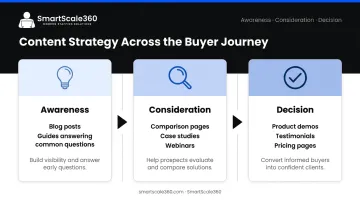
The key is aligning content with buyer journey stages:
- Awareness: Blog posts and guides that answer common questions
- Consideration: Comparison pages, case studies, webinars
- Decision: Product demos, testimonials, pricing pages
SEO amplifies content reach. Optimizing for search intent — not just keywords — ensures your content surfaces when prospects are evaluating their options. Site speed and mobile optimization matter here too; they determine whether that traffic converts or bounces.
Email Marketing
Email remains one of the highest-ROI channels available. Litmus reports email marketing generates an average of $36 for every $1 spent — and segmented campaigns drive 50% more click-throughs than unsegmented sends.
An effective email program uses:
- Segmentation by lead stage, industry, or behavior
- Drip sequences that move prospects from IQL to MQL over time
- Personalization beyond just using a first name
- Clear CTAs that match where the prospect is in their journey
Paid Digital Advertising (PPC and Social Ads)
Paid channels generate leads faster than organic, but require careful targeting. Google Ads average a cost per lead of $66.69 across industries — a useful baseline for budget planning, though B2B campaigns often run higher depending on the vertical.
What drives performance in paid campaigns:
- Audience segmentation — targeting by job title, industry, or intent signal
- Retargeting — re-engaging visitors who didn't convert on the first visit
- Conversion tracking — connecting ad spend directly to lead outcomes
LinkedIn ads tend to outperform for B2B lead generation; Facebook and Instagram work better for B2C or top-of-funnel awareness plays.
Social Media Engagement
Organic social builds the trust that converts a stranger into a warm lead. Consistent thought leadership posts, community engagement, and genuine responsiveness to comments create familiarity before any sales conversation happens.
Platform selection shapes your results:
- LinkedIn — the go-to for B2B audiences, decision-makers, and professional services
- Instagram and Facebook — stronger for consumer-facing brands or local businesses
- Niche communities (Reddit, industry forums) — useful for highly targeted B2B verticals
Start with one or two platforms where your buyers are active, then expand as you build traction.
Best Practices for Digital Marketing Lead Generation
Build and Optimize Dedicated Landing Pages
Every lead generation campaign needs its own landing page — not a homepage. Unbounce reports a median landing page conversion rate of 6.6% based on data from 41,000 landing pages and 464 million visitors.
High-converting landing pages share common traits:
- A single, specific CTA (not three competing options)
- A headline that speaks to the visitor's pain point
- Social proof — testimonials, client logos, or case study references
- A form that asks for minimal information upfront (name and email, not their entire company history)
Lead Scoring and Qualification
Without a lead scoring system, high-potential prospects fall through the cracks while sales chases dead ends. Lead scoring assigns point values to specific behaviors — email opens, content downloads, pricing page visits, demo requests — so teams can prioritize follow-up based on actual intent signals rather than guesswork.
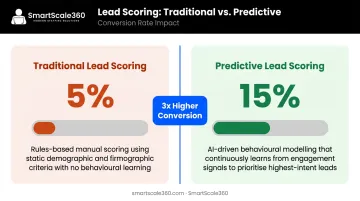
Research published via NCBI found that predictive lead scoring systems achieved a 15% lead-to-customer conversion rate compared to just 5% with traditional methods. That gap widens further when scoring models are refined over time using closed-won data.
Implement Marketing Automation and CRM Tools
Automation platforms like HubSpot and ActiveCampaign manage lead nurturing at scale — triggering follow-up sequences, updating lead stages, and flagging high-scoring prospects for sales. For small teams handling significant lead volume, the manual alternative simply doesn't hold up.
Key things automation handles well:
- Moving leads through stages without manual intervention
- Triggering personalized follow-up based on specific behaviors
- Keeping CRM data clean and up to date
A/B Test Campaigns Continuously
The fastest way to improve conversion rates is running controlled tests on the elements that drive them. Start with:
- Email subject lines and send times
- Landing page headlines and CTA button text
- Ad copy and creative formats
Test one variable at a time, let data accumulate before declaring a winner, and apply learnings to the next campaign cycle.
Align Sales and Marketing Around Lead Handoff
Misalignment between sales and marketing is a revenue problem. ZoomInfo reports that 79% of marketing leads never convert into sales — and sales teams ignore 50% of marketing leads entirely. Much of that waste comes from unclear handoff criteria.
A Service Level Agreement (SLA) between teams should define:
- What behaviors qualify a lead as an MQL
- What makes an MQL sales-ready (SQL)
- How quickly sales follows up after a lead is passed
- How marketing gets feedback on lead quality
Metrics to Measure Digital Marketing Lead Performance
The KPIs you track determine whether you're making informed decisions or just generating noise. Here are the metrics every digital marketing lead should monitor:
| KPI | What It Measures | Why It Matters |
|---|---|---|
| Cost Per Lead (CPL) | Spend divided by leads generated | Guides budget allocation by channel |
| Lead Conversion Rate | Visitors who become leads | Indicates landing page and offer effectiveness |
| MQL-to-SQL Rate | MQLs that become sales-ready | Reveals lead quality and sales-marketing alignment |
| Lead Velocity Rate | Month-over-month lead growth | Predicts future pipeline health |
| ROAS | Revenue generated per dollar of ad spend | Measures paid channel efficiency |
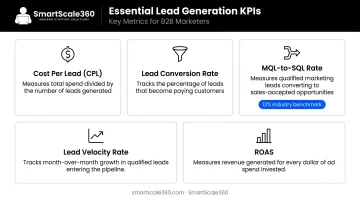
MetricHQ reports the average MQL-to-SQL conversion rate is 13% across industries — useful as a general benchmark, though B2B website leads typically convert at around 31%.
Attribution: Know Which Channels Drive Quality
Those benchmarks only tell part of the story. A channel generating 500 leads at a 2% close rate performs worse than one generating 50 leads at 30%. Multi-touch attribution (tracking the full path a lead takes before converting) gives a more accurate picture of which channels actually earn their budget.
Review Cadence
- Weekly: Review active campaigns for performance drops, budget pacing, and early warning signs
- Monthly: Assess channel mix, trend data, and strategic adjustments to investment allocation
Frequently Asked Questions
What is a digital marketing lead?
A digital marketing lead has two meanings. It refers to a prospective customer who has shown interest through a digital channel — a form fill, an email click, or a site visit. It also refers to the professional role responsible for planning and executing a company's digital marketing strategy across channels.
What is the difference between an MQL and an SQL in digital marketing?
An MQL (Marketing-Qualified Lead) has engaged with marketing content and shows buying interest but isn't ready for a sales conversation. An SQL (Sales-Qualified Lead) has demonstrated clear purchase intent and meets the criteria to be contacted directly by a sales rep.
What channels are most effective for digital marketing lead generation?
SEO and content marketing, email campaigns, paid search (Google Ads), and LinkedIn advertising perform well for B2B lead generation. The best channel mix depends on your target audience and budget — most SMBs see the highest ROI from email and organic search.
What does someone in a digital marketing lead role do day-to-day?
Core daily tasks include managing and optimizing live campaigns, reviewing analytics dashboards, coordinating with content and design teams, tracking lead pipeline against targets, and reporting on KPIs. The role involves both execution and strategic decision-making.
How can small businesses generate leads through digital marketing on a limited budget?
Start with SEO and organic content — they compound over time without ongoing ad spend. Build and nurture an email list early, use free social tools for awareness, then layer in retargeting ads to re-engage warm prospects before expanding into broader paid campaigns.
How do you know if your digital marketing lead generation is working?
Track your visitor-to-lead conversion rate, cost per lead, and MQL-to-SQL ratio. Positive trends across all three over a 60–90 day window indicate a healthy engine — flat or declining numbers point to issues with offer, targeting, or sales-marketing alignment.